
Irene and Clare’s Intimacy
Passing (Nella Larsen Edition)This flow follows an attachment marked by fascination, resistance, emotional dependence, and interpretive uncertainty.
increasing Bearing strength in each event
 decreasing
Bearing strength in each eventdecreasingThe Stare Across the Table
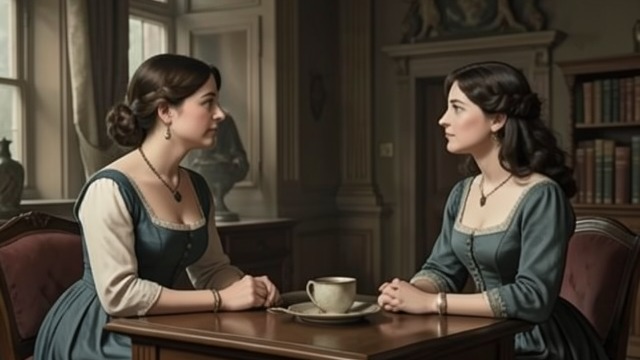
The Stare Across the Table
A charged first recognition
Irene feels watched by the woman at the next table before learning that she is Clare. Suspicion gives way to recognition and a sudden familiarity.
Fascination mixed with reserve
Irene is flattered by Clare’s pleasure at seeing her but worries about the danger of renewed contact. Attraction and caution arise together.
The Invitation and the Kiss
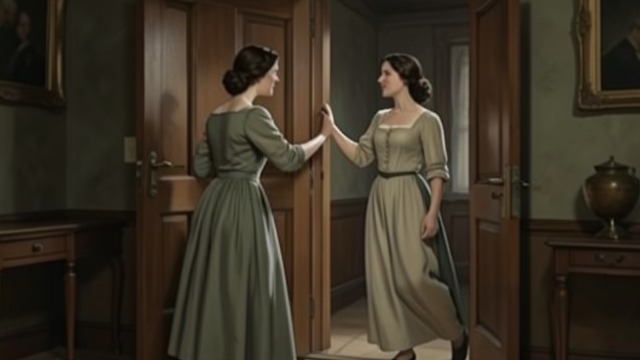
The Invitation and the Kiss
Resistance softened by affection
Irene prepares to reject Clare but responds warmly when Clare enters and kisses her. Her immediate tenderness complicates her claim that she wants no further contact.
A recurring emotional pattern
Clare’s presence repeatedly draws Irene closer than she intends. The friendship is sustained by affection, admiration, and a mutual power to unsettle the other.
The Letter of Longing

The Letter of Longing
Clare names her loneliness
Clare writes that she longs to see Irene and the life she once left. Her letter describes an ache that Irene finds excessive but cannot dismiss.
Intimacy without certainty
The language can be read as emotional dependence, a performance, or both. Irene’s reactions leave open how much she welcomes the closeness and how much she fears it.
The Visitor in the Household
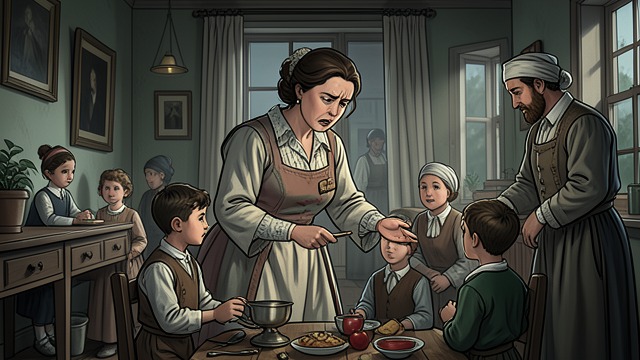
The Visitor in the Household
Familiarity deepens
Clare visits the Redfields and spends time with their children and servants. Irene sometimes resents the ease with which Clare enters spaces Irene considers her own.
Affection and irritation coexist
Irene neither ends the visits nor openly welcomes them. The friendship persists through contradictions that she rarely states plainly.
The Hand on Clare’s Arm

The Hand on Clare’s Arm
Contact at the decisive moment
When Bellew exposes Clare, Irene crosses the room and places a hand on her arm. Her thoughts combine terror, possessiveness, and a fear that Clare might become free.
Intimacy made incriminating
After Clare falls, Irene cannot forget that touch. The physical gesture becomes central to her shame and to the unresolved question of what happened.
At the Drayton Hotel reunion
During Clare’s first visit to Irene’s home
Autumn, before Clare visits Harlem regularly
The months after the Harlem dance
Christmas night, just before the fall
